
How to Descale a Coffee Maker: Best Solutions and Complete Guide
Regularly learning how to descale coffee maker equipment is one of the simplest ways to maintain better brewing performance and extend the life of your machine.
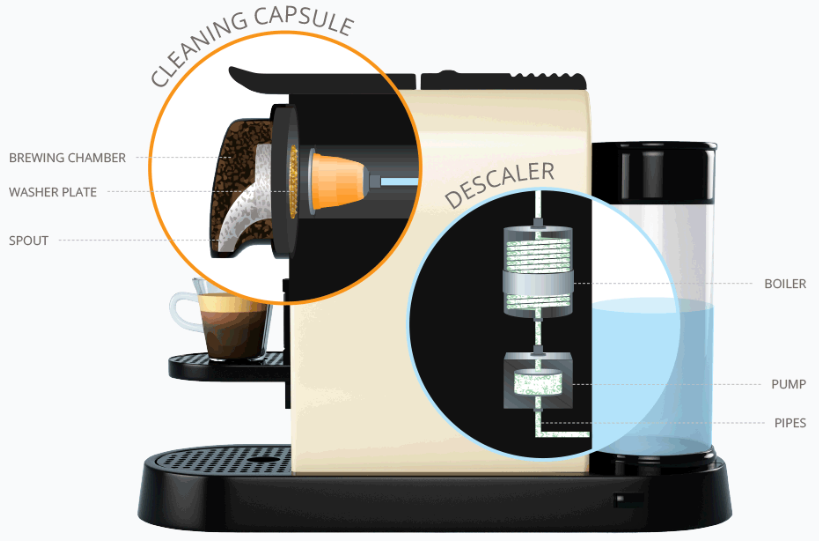
Mineral buildup from hard water can accumulate inside water lines, heating elements, valves, and other internal components. This is the silent reason many coffee makers brew slowly, taste bitter, or stop working altogether.
Over time, that buildup can affect water flow, brewing temperature, and the taste of coffee. This guide explains what scale is, which coffee descalers work best, and how to descale drip, single-serve and espresso machines without damaging seals or heating elements.
Choosing the right descaling product matters just as much as performing the process correctly. A quality descaling solution can dissolve mineral deposits without unnecessarily exposing sensitive components to harsh cleaning agents. Whether you own a drip brewer, Keurig, Ninja, DeLonghi, or espresso machine, the correct product and procedure depend on the manufacturer’s instructions.
Why You Should Descale a Coffee Maker Regularly
Water contains dissolved minerals such as calcium and magnesium. When water is repeatedly heated, some of those minerals can form scale inside the coffee maker. The problem tends to be more noticeable in areas with hard water.
Regular descaling can help:
- Reduce mineral buildup inside the water system.
- Maintain consistent water flow.
- Support normal heating performance.
- Reduce unusual tastes caused by mineral deposits.
- Keep brewing cycles from becoming unnecessarily slow.
- Support the manufacturer’s recommended maintenance schedule.
Signs Your Coffee Maker May Need Descaling
A machine does not always provide an obvious warning before scale becomes significant. Common signs include slower brewing, reduced water flow, unusual noises during heating, incomplete brewing cycles, or a noticeable change in coffee flavor.
Some machines also have a dedicated descale warning or indicator. However, the meaning of the indicator and the procedure for clearing it vary by model.
These are the common signs that you should consider:
- Brew cycles take noticeably longer than they used to
- Coffee tastes flat, sour or bitter
- The machine sounds louder or gurgles during brewing
- Less water reaches the carafe or cup than you poured in
- A white, chalky film appears in the reservoir
- A descale or clean indicator light turns on
How Often Your Coffee Machine Should be Descaled?
A common guideline is every one to three months, depending on your water hardness and how often you brew.
Households with hard water should lean toward monthly descaling, while those using filtered or soft water can stretch the interval.
Always follow the schedule in your owner’s manual, since manufacturers know how their heating systems respond to acid.
Step by Step Descaling Coffee Maker Guide
The safest approach is to follow the coffee maker manufacturer’s maintenance instructions first. Different machines have different water reservoirs, cleaning cycles, filters, sensors, and internal materials.
1. Empty and Prepare the Coffee Maker
Remove coffee grounds, used pods, and any remaining coffee. Empty the drip tray if your machine has one. If the manufacturer recommends removing a water filter before descaling, remove it before beginning the cycle.
2. Prepare the Descaling Solution
Use a commercial descaler or another solution specifically approved by the manufacturer. Follow the product’s dilution instructions rather than assuming that a stronger solution will work better.
This is particularly important with concentrated liquid descalers because excessive concentration can expose machine components to unnecessarily strong acidic solutions.
3. Run the Descaling Cycle
Add the prepared solution to the reservoir and start the machine’s designated descaling or cleaning program. If there is no automatic program, follow the manufacturer’s manual for the appropriate brewing procedure.
4. Allow the Solution to Work
Some machines require pauses during the cycle so the solution can contact mineral deposits. Avoid improvising extended soaking periods unless the manufacturer or descaler instructions specifically recommend it.
5. Rinse the Machine Thoroughly
Once the descaling cycle is complete, empty the reservoir and rinse it thoroughly. Fill the machine with fresh water and run the recommended rinse cycles. Some manufacturers recommend multiple full reservoirs of fresh water.
6. Reinstall the Water Filter
If you removed a water filter before descaling, reinstall or replace it according to the manufacturer’s maintenance instructions.
Choosing the Best Descaler for Your Coffee Maker
The best descaler for coffee maker maintenance is not necessarily the strongest acid available. Compatibility, concentration, instructions, machine materials, and ease of rinsing are all important considerations.
Liquid Descaler for Coffee Maker
A liquid descaler is convenient because it can generally be diluted according to the manufacturer’s instructions. It is available in formulations designed for coffee machines, kettles, and other appliances.
When evaluating a liquid product, look for clear dilution instructions and compatibility information for your specific machine type.
Espresso Coffee Maker Descaler Tablets
Descaling tablets can be convenient for users who prefer premeasured cleaning products. However, tablets designed for one cleaning function should not automatically be assumed to replace a manufacturer’s recommended descaling product.
Check whether the tablet is specifically intended for descaling rather than general cleaning or backflushing.
Universal Coffee Maker Descaling Solution
A universal coffee maker descaling solution can be useful when a household contains several compatible machines. Nevertheless, “universal” does not mean suitable for every coffee machine. Always verify compatibility with the machine’s manufacturer and materials.
Citric Acid Ratio for Descaling Coffee Maker
Citric acid is commonly discussed as a household descaling ingredient because it reacts with mineral deposits.
However, there is no single citric acid ratio for descaling coffee maker equipment that is appropriate for every machine.
The correct concentration depends on the appliance manufacturer’s recommendations and the particular citric-acid product being used.
Should You Use Citric Acid Instead of Commercial Descaler?
A commercial coffee-machine descaler has the advantage of being formulated and labeled for appliance maintenance.
Citric acid may be appropriate for some appliances, but using it without checking the manufacturer’s instructions can introduce compatibility and concentration uncertainties.
For expensive espresso machines or machines with specialized internal components, a manufacturer-approved descaler is generally the more straightforward maintenance choice.
Durgol Universal Descaler vs Vinegar Coffee Maker
The comparison between Durgol universal descaler vs vinegar coffee maker cleaning often comes down to formulation, intended use, odor, rinsing requirements, and manufacturer compatibility.
Commercial Descaler
- Designed specifically for descaling appliances.
- Usually includes clear application instructions.
- Available in formulations intended for coffee machines.
- Often provides predictable dosing instructions.
Vinegar
- Contains acetic acid that can react with mineral deposits.
- May leave a noticeable odor that requires thorough rinsing.
- Is not approved by every coffee-machine manufacturer.
- Can be inappropriate when the manufacturer specifically prohibits vinegar.
The safest choice is to follow the coffee maker’s maintenance instructions rather than assuming that vinegar is universally acceptable.
Safe Descaler for Espresso Machine Rubber Seals
Espresso machines can contain seals, gaskets, tubing, valves, and other components made from different materials.
Consequently, choosing a safe descaler for espresso machine rubber seals requires more than simply selecting an acidic cleaner.
What to Check Before Descaling Your Coffee Machine
- Read the espresso machine’s maintenance instructions.
- Use a descaler specifically recommended or approved for the machine.
- Follow the manufacturer’s concentration and contact-time instructions.
- Never assume that a household cleaning acid is compatible with every seal or gasket.
- Rinse thoroughly after descaling.
Descaling Solution for Keurig Machine Safe for Aluminum
When looking for a descaling solution for Keurig machine safe for aluminum components, compatibility should come before price or concentration. Aluminum and other metals can respond differently to acidic cleaning products depending on the formulation and exposure time.
Rather than relying on a generic “safe for aluminum” claim, check the machine manufacturer’s recommendations and the descaler manufacturer’s compatibility information.
Why Material Compatibility Matters
Acidic solutions can interact with mineral deposits, but the same chemistry can also interact with certain appliance materials under inappropriate conditions. Correct dilution, temperature, and contact time therefore matter.
Best Commercial Descaler for Ninja Coffee Maker
When searching for the best commercial descaler for Ninja coffee maker equipment, start with the maintenance instructions for the exact Ninja model. Different Ninja brewers can have different cleaning procedures and indicators.
A suitable commercial product should provide:
- Clear dilution instructions.
- Instructions specifically applicable to coffee machines.
- Compatibility information.
- Simple rinsing requirements.
- Clearly stated usage directions.
Avoid choosing a descaler solely because it is marketed as “extra strength.” More concentrated does not automatically mean better for a particular coffee machine.
Best Descaling Solution for Drip Coffee Maker
The best descaling solution for drip coffee maker maintenance should be compatible with the brewer and easy to rinse completely.
Drip coffee makers are relatively simple compared with many espresso machines, but their heating pathways can still accumulate mineral deposits.
What Makes a Good Drip Coffee Maker Descaler?
- Designed for coffee equipment.
- Clear dilution instructions.
- Appropriate for the machine’s materials.
- Easy to flush from the water pathway.
- Compatible with the manufacturer’s cleaning procedure.
Eco Friendly Liquid Descaler for Drip Coffee Makers
An eco friendly liquid descaler for drip coffee makers can be appealing to consumers who want to reduce unnecessary packaging or use a formulation with a more environmentally conscious profile.
However, environmental claims should be evaluated carefully. Look for specific information about ingredients, packaging, biodegradability, manufacturing claims, and disposal instructions rather than relying solely on terms such as “green” or “eco-friendly.”
Non-Toxic Descaler for Coffee Machine
The phrase non-toxic descaler for coffee machine can be misleading because a product’s safety depends on how it is formulated, handled, diluted, and used. A descaling solution should never be treated as harmless simply because it is marketed as natural or plant-based.
Safe Descaling Practices
- Keep concentrated descaler away from children and pets.
- Follow the label’s dilution instructions.
- Avoid mixing different cleaning chemicals.
- Do not ingest the descaling solution.
- Rinse the machine according to the manufacturer’s instructions.
- Store concentrated products in their original containers.
Natural Descaler for Coffee Maker: Is It Better?
A natural descaler for coffee maker maintenance may appeal to consumers who prefer simpler ingredients. Citric acid and vinegar are frequently discussed as household alternatives, but “natural” does not automatically mean better or safer for every appliance.
The machine manufacturer’s approved descaling method remains the most reliable starting point, especially for machines with complex internal components.
DeLonghi Coffee Maker Descaling Solution
For a DeLonghi machine, use the manufacturer’s instructions for the specific model when selecting and applying a DeLonghi coffee maker descaling solution. DeLonghi machines can include automated maintenance programs that guide users through the process.
Why Model-Specific Instructions Matter
The amount of descaler, water volume, sequence of operations, and indicator-reset procedure can differ between machines.
Following generic instructions from another model can therefore produce an incorrect maintenance cycle.
Oxo Brew 9 Cup Descale Indicator Reset
If you are searching for an Oxo Brew 9 Cup descale indicator reset, first consult the instructions for the exact brewer revision.
A descale indicator generally needs to be cleared using the machine’s prescribed cleaning procedure rather than simply being switched off manually.
If the indicator remains active after completing the recommended descaling cycle, verify that the complete cleaning and rinse procedure was followed before attempting additional troubleshooting.
How Often Should You Descale a Coffee Maker?
There is no universal schedule that applies to every coffee maker. Water hardness, usage frequency, machine design, and the manufacturer’s maintenance recommendations all influence the appropriate interval.
As a practical maintenance strategy:
- Follow the manufacturer’s stated descaling schedule when available.
- Pay attention to built-in maintenance indicators.
- Consider water hardness when determining how quickly scale develops.
- Do not wait for severe performance problems before maintaining the machine.
Common Descaling Mistakes to Avoid
Using Too Much Descaler
A stronger mixture is not necessarily more effective. Excessive concentration can increase the chemical exposure of internal components without providing a corresponding maintenance benefit.
Skipping the Rinse Cycle
One of the most important parts of descaling is flushing the machine afterward. Follow the manufacturer’s recommended number of rinse cycles and fresh-water volume.
Using Vinegar Without Checking the Manual
Vinegar is inexpensive and widely available, but it should not automatically be considered compatible with every coffee maker.
Confusing Cleaning With Descaling
Cleaning coffee oils and descaling mineral deposits are different maintenance tasks. A product designed for one purpose may not replace the other.
Final Buying Guide for Coffee Maker Descalers
When comparing a descaling solution for drip coffee maker equipment, an espresso machine, or an automatic brewer, focus on compatibility rather than simply choosing the strongest or cheapest product.
Quick Checklist
- Does the manufacturer approve the product?
- Is the product specifically formulated for coffee machines?
- Does it provide clear dilution instructions?
- Is it compatible with the machine’s materials?
- Does it explain the required rinse procedure?
- Is the package size appropriate for your maintenance schedule?
- Does the product clearly distinguish descaling from general cleaning?
Learning how to descale coffee maker equipment correctly can help maintain consistent brewing performance and reduce mineral buildup.
The most important factor is not simply finding the strongest descaler, but matching the product and procedure to the coffee maker.
Whether you are comparing a liquid descaler for coffee maker maintenance, espresso coffee maker descaler tablets, citric acid, vinegar, or a universal coffee maker descaling solution, always check the manufacturer’s instructions first.
For machines with specialized materials, seals, aluminum components, or automated maintenance indicators, model-specific guidance becomes especially important.
A well-maintained coffee maker does not require complicated maintenance. Use an appropriate descaler, follow the recommended procedure, complete the rinse cycle, and maintain the machine at the interval specified by its manufacturer.
Frequently Asked Questions
Can I descale a coffee maker with vinegar?
Yes, for many drip machines, provided your manual allows it. Dilute it, rinse thoroughly, and avoid frequent use on machines with delicate seals.
Is citric acid better than vinegar?
Citric acid typically dissolves scale more efficiently and leaves less odor, which is why many owners and manufacturers prefer it.
Is descaling the same as cleaning?
No. Cleaning removes coffee oils and residue, while descaling removes mineral deposits. Both are needed.
Will descaling void my warranty?
Using the descaler recommended in your manual is the safest way to protect your warranty.
Conclusion
Knowing how to descale a coffee maker is one of the simplest ways to protect your investment and improve every cup.
Choose a coffee descaler suited to your machine type, follow the correct ratio, rinse thoroughly, and stay consistent.
When in doubt, consult your manufacturer’s guidance, as your machine’s design is the final authority on what is safe.
