
How to Make Cuban Coffee Authentic Recipe at Home: Cafecito & Espumita
Cuban coffee, also known as cafecito or café Cubano, is a small but powerful coffee drink with a bold flavor, satisfying sweetness, and a beautiful caramel-colored foam on top. It is more than a morning caffeine boost. In Cuban culture, coffee is a way to welcome guests, catch up with family, and enjoy a few minutes of conversation.
The good news is that you do not need an expensive espresso machine to recreate this tradition at home. With a moka pot, finely ground espresso-style coffee, sugar, and a little patience, you can make a delicious Cuban coffee that tastes rich and balanced. The secret is espumita, the sweet foam created by whipping the first concentrated drops of coffee with sugar.
In this guide, you will learn how to make Cuban coffee using a moka pot, prepare traditional sugar foam, avoid common brewing mistakes, and turn your cafecito into a creamy cortadito or café con leche.
What Is Cuban Coffee?
Cuban coffee is traditionally a strong, sweet coffee prepared with dark espresso-style grounds. At home, it is commonly brewed in a metal moka pot called a cafetera. Sugar is mixed with a small amount of the first brewed coffee to create espumita, which gives the finished drink its signature appearance and smooth mouthfeel.
Although Cuban coffee resembles espresso, a moka pot operates differently from a commercial espresso machine. It uses steam pressure to push hot water through ground coffee, producing a concentrated brew without the same pressure or extraction characteristics as a traditional espresso machine.
On the other words, Cuban coffee, called cafecito or café cubano, is a small, strong, sweet shot of espresso-style coffee. It is similar to Italian espresso, with one defining difference: the sugar goes in during brewing, not afterward. Italians usually serve sugar on the side. Cubans whip it into the very first drops of coffee to build a caramel-colored foam on top.
There is no single recipe followed by every Cuban household. Some people prefer more sugar, some use brown sugar, and others prepare their coffee with a commercial espresso machine. The essential idea is simple: bold coffee, sweetness to taste, and a little foam to bring everything together.
Popular Cuban Coffee Drinks
- Cafecito: A small serving of strong, sweet Cuban coffee, traditionally topped with espumita.
- Colada: A larger batch of sweet Cuban coffee intended to be shared among several people in small cups.
- Cortadito: Cuban coffee combined with a smaller amount of milk, often steamed milk or half-and-half.
- Café con leche: A milk-forward coffee drink commonly enjoyed at breakfast, especially with Cuban toast.
Cuban Coffee vs. Espresso
- Sugar: Cuban coffee is sweetened at the start, which gives it a thicker, richer mouthfeel.
- Foam: The top layer comes from whipped sugar and coffee, not from machine pressure.
- Equipment: Most home cooks use a stovetop moka pot, called a cafetera or greca.
- Serving size: It is served in tiny demitasse cups because it is concentrated and highly caffeinated.
Ingredients and Equipment for Cuban Coffee
One of the best things about an authentic Cuban coffee recipe with sugar foam is that it requires only a few basic ingredients. Choose a coffee that suits your taste instead of assuming you need expensive specialty beans or complicated equipment.
Ingredients
- Finely ground coffee: Use dark espresso-style coffee suitable for a moka pot. Café Bustelo, Café Pilon, and La Llave are familiar options.
- Granulated sugar: Start with approximately 3 tablespoons for a standard six-serving moka pot, adjusting the amount to taste and the size of your pot.
- Water: Use enough to fill the lower chamber according to your moka pot’s instructions, keeping the water below the safety valve.
- Milk, optional: Use whole milk, evaporated milk, half-and-half, or an unsweetened plant-based alternative for milk-based variations.
Equipment
- A moka pot or cafetera
- A small, sturdy cup or bowl for mixing the sugar foam
- A spoon for whipping and stirring
- Small demitasse cups for serving
- A small saucepan and milk frother, if making a cortadito
How to Make Cuban Coffee Using a Moka Pot
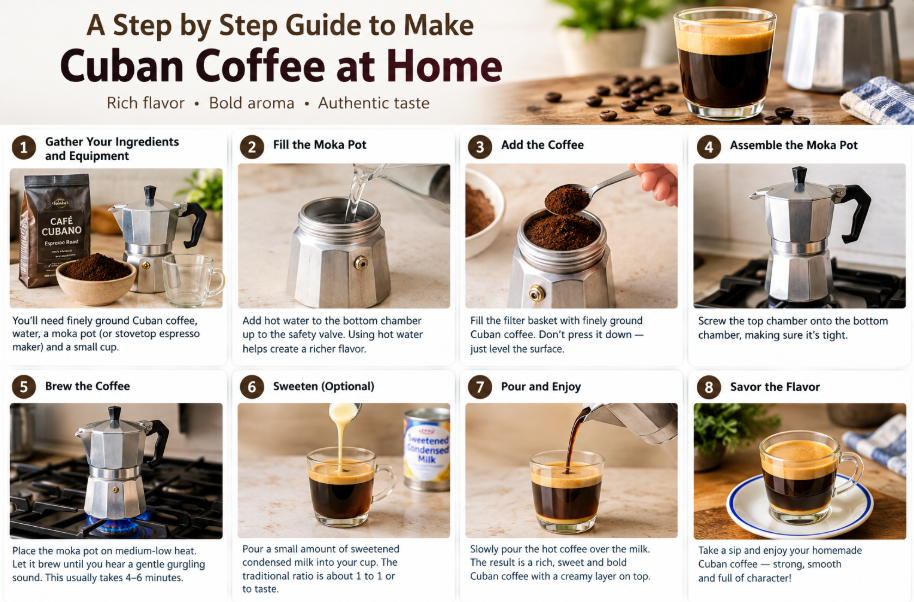
If you want to learn how to make Cuban coffee using a moka pot, start by preparing the coffee basket correctly. The goal is a concentrated, flavorful brew without forcing water through an overly compressed bed of grounds.
Step 1: Fill the Water Chamber
Unscrew the moka pot and remove the filter basket. Fill the bottom chamber with water up to the level specified by the manufacturer, generally below the pressure-release safety valve. Never cover the valve because it is an important safety feature.
Some coffee makers begin with hot water to shorten brewing time and reduce how long the grounds remain exposed to heat. If you choose this approach, handle the hot lower chamber carefully. Otherwise, use room-temperature water and follow your moka pot’s normal instructions.
Step 2: Add and Level the Coffee
Fill the filter basket with finely ground espresso-style coffee. Distribute the grounds evenly and gently level the surface. Do not tamp or compress the coffee like you would when preparing espresso in a commercial machine.
Leaving the grounds appropriately loose allows water to pass through the basket as intended. Before assembling the pot, wipe away stray grounds from the rim so the seal can close properly.
Step 3: Assemble the Moka Pot
Place the filled filter basket into the lower chamber and screw the upper chamber on securely. Check that the gasket and rim are clean and properly seated. A good seal helps prevent steam and water from escaping around the sides.
Step 4: Brew Over Controlled Heat
Place the moka pot on the stove over medium-low to medium heat, adjusting the setting to suit your equipment. Avoid excessive heat, which can make the coffee taste harsh or burnt and cause the brewing process to become unnecessarily aggressive.
Keep an eye on the pot as coffee begins flowing into the upper chamber. When the flow becomes lighter or the pot begins to gurgle, remove it from the heat according to the manufacturer’s instructions. Do not leave it brewing longer than necessary.
Step 5: Prepare the Sugar
While the coffee brews, place approximately 3 tablespoons of granulated sugar in a sturdy cup or small bowl for a standard six-serving moka pot. You can increase or decrease the amount depending on how sweet you like your coffee.
Keep your mixing bowl ready because the first drops of coffee are the key to making the foam.
Step 6: Collect the First Drops of Coffee
As soon as the first concentrated coffee begins to emerge from the moka pot, collect a small amount and add it to the sugar. Start with just enough liquid to moisten the sugar rather than pouring in a large quantity.
This step is central to how to make espumita for Cuban coffee. The early coffee provides the liquid needed to transform the sugar into a thick mixture that can be whipped into a light, caramel-colored foam.
Step 7: Whip Until Thick and Creamy
Using a spoon, beat the sugar and coffee vigorously. Press the mixture against the side of the bowl as you stir to help the sugar dissolve and the texture become more uniform.
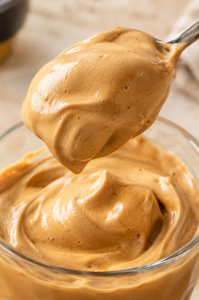
Initially, the mixture may look dark and wet. Continue whipping until it becomes lighter in color and develops a thick, creamy consistency, similar to a loose coffee paste.
The most important tip: Add coffee a few drops at a time. Too much liquid will leave you with sweet coffee instead of a thick foam. If the mixture seems too dry, add another tiny splash and keep whipping.
Step 8: Combine the Foam and Brewed Coffee
When the remaining coffee has finished brewing, remove the pot from the heat and carefully pour the coffee into the prepared sugar mixture. Stir gently to combine everything without losing all the foam.
A light brown, caramel-colored layer should rise to the surface. Spoon or pour the coffee into small demitasse cups, distributing the espumita evenly so everyone gets a little of that signature topping.
How to Make Espumita for Cuban Coffee
Espumita is the signature sweet foam that makes Cuban cafecito distinctive. Unlike the crema produced during espresso extraction, this foam is created by whipping sugar with a small amount of freshly brewed coffee. The mixture becomes lighter in color, thicker, and creamy before the rest of the coffee is added.
How to Make Cuban Coffee With Café Bustelo
If you are wondering how to make Cuban coffee with Cafe Bustelo, the process is straightforward. Café Bustelo is a familiar espresso-style coffee option for making a strong, sweet cafecito at home.
- Fill your moka pot with water below the safety valve.
- Fill the filter basket evenly with Café Bustelo grounds without tamping them down.
- Assemble the pot securely and brew over controlled heat.
- Add approximately 3 tablespoons of sugar to a small bowl for a standard six-serving pot, adjusting as desired.
- Collect the first few drops of coffee and whip them into the sugar until thick and creamy.
- Finish brewing, remove the pot from the heat, and gently combine the coffee with the foam.
- Serve immediately in small cups.
You can also use Café Pilon, La Llave, or another finely ground coffee intended for this brewing style. Different brands have different flavor profiles, so choose the one you enjoy most.
How to Make Cuban Coffee With an Espresso Machine
A traditional espresso machine offers another way to prepare café Cubano. If you are learning how to make sugar foam for Cuban coffee espresso machine preparation, you can use the same basic espumita technique: whip sugar with a small amount of freshly extracted espresso, then combine it with the remaining shot.
Espresso Machine Method
- Prepare a normal espresso shot using your machine’s usual dose and grind settings.
- Place sugar in a small cup or bowl. Brown sugar can be used for a deeper, molasses-like sweetness.
- Collect a small amount of freshly extracted espresso and add it to the sugar.
- Whip vigorously until the mixture becomes thick and lighter in color.
- Gently stir in the rest of the espresso and serve immediately.
Some espresso-machine methods incorporate sugar directly into the portafilter with the coffee grounds. However, sugar can caramelize and leave residue inside the machine. For a home recipe, preparing the sugar mixture separately is a practical approach that avoids introducing sugar into the group head and coffee basket.
Clean the group head and backflush your machine when required by its manufacturer, especially if you have used a method that introduces sugar into the portafilter.
How to Make Cortadito Cuban Style
A cortadito is a wonderful choice when you enjoy strong coffee but want a softer, creamier finish. The coffee remains prominent, while milk adds richness and balances the intensity of the espresso.
Ingredients
- 1 part prepared Cuban coffee
- Approximately 1 part steamed milk or half-and-half
- Optional extra sugar, depending on how sweet your cafecito already is
Preparation
- Prepare your Cuban coffee using the moka pot or espresso-machine method.
- Heat the milk in a small saucepan or steam it with an espresso machine.
- For stovetop heating, warm the milk gently and watch closely to prevent it from boiling over.
- Combine the coffee and milk in a small cup, starting with approximately equal parts.
- Stir gently and serve while warm.
This explains how to make cortadito cuban style at home. Some recipes use more coffee than milk, while others use a richer dairy product such as half-and-half. Adjust the proportions to create your preferred balance of sweetness, strength, and creaminess.
How to Make Cortadito Cuban Coffee With Oat Milk
For a dairy-free version, learning how to make cortadito cuban coffee with oat milk is easy. Prepare the Cuban coffee as usual, then warm and lightly froth your favorite barista-style oat milk.
- Make a small serving of sweet Cuban coffee.
- Warm the oat milk without allowing it to boil.
- Froth it lightly if you prefer a creamy texture.
- Combine the coffee and oat milk in approximately equal parts, or add less milk for a stronger drink.
- Taste before adding more sugar because the coffee may already be sweetened.
Oat milk brands vary in sweetness and how well they froth, so choose one designed for hot drinks if you want a smoother result.
How to Make Café Con Leche
Café con leche is a milk-forward Cuban coffee drink often served in a larger cup than a traditional cafecito. It is especially popular at breakfast, where it pairs beautifully with buttered Cuban toast.
Ingredients
- 1 part strong Cuban coffee
- 2 parts milk, or another proportion to taste
- Optional evaporated milk for a richer flavor
- Optional sugar to taste
Preparation
- Prepare a batch of Cuban coffee.
- Pour the milk into a small saucepan and heat gently, stirring as needed.
- Add a little evaporated milk if you want a richer result.
- Combine approximately 1 part coffee with 2 parts hot milk.
- Stir, taste, and adjust the sweetness before serving.
Heating milk in a saucepan gives you more control over its temperature and texture. Watch it carefully because milk can rise quickly as it approaches a boil.
Understanding the Cuban Coffee Ratio: Coffee to Water
The cuban coffee ratio coffee to water depends on the size and design of your moka pot. Unlike a pour-over recipe, moka pots generally have a filter basket designed for a particular amount of coffee and a lower chamber with a specified fill level.
- Water: Fill the lower chamber to the manufacturer’s recommended level, usually below the safety valve.
- Coffee: Fill the basket evenly without tamping it down.
- Sugar: Start with approximately 3 tablespoons for a standard six-serving pot, then adjust to taste.
For the most consistent result, follow your pot’s capacity markings and avoid forcing extra coffee into the basket. Moka pot sizes vary, so a single universal coffee-to-water measurement will not suit every model.
Why Is My Cuban Coffee Bitter?
If you are asking why is my Cuban coffee bitter, the first thing to check is how you brewed it. Cuban coffee is naturally bold, and dark-roasted coffee can have pronounced bitterness, but excessive heat or prolonged brewing can make the flavor harsh and burnt.
Common Causes and Solutions
If you are asking why is my cuban coffee bitter, one of these culprits is likely to blame:
-
- Heat is too high: Lower the heat and allow the coffee to brew steadily instead of aggressively.
- Brewing takes too long: Remove the pot from the heat as the brew finishes, following the manufacturer’s guidance.
- The coffee basket is packed too tightly: Level the grounds without tamping them down.
- The grind is unsuitable: Use finely ground coffee intended for moka pot brewing rather than coarse drip coffee.
- The sugar foam is too thin: Add less coffee to the sugar initially and whip until the mixture thickens before adding more liquid.
- The coffee is too sweet: Reduce the sugar gradually while remembering that less sugar may produce a different foam texture.
- Wrong grind: Coarse drip coffee will not give the same result. Use finely ground espresso-style coffee.
- Packing the basket too hard: Level it gently instead of tamping.
- Covering the safety valve with water: Fill below it.
- Too much heat: Burnt does not mean strong. Use medium to medium-low heat.
- Missing the first drops: These concentrated drops are the base for espumita.
- Too much coffee in the sugar: You want paste, not soup.
- Not whipping enough: Keep going until it is pale and creamy.
- Confusing espumita with crema: They are not the same thing.
- Letting it sit: Cafecito is best fresh.
- Overcomplicating it: Good coffee, sugar and technique beat fancy gadgets.
Remember that strong and burnt are not the same thing. A properly brewed cafecito should have a robust coffee flavor balanced by sweetness, rather than an unpleasant scorched taste.
Can You Make Cuban Coffee in a French Press?
If you are wondering how to make Cuban coffee in a French press, you can prepare a strong coffee concentrate using a French press, but the result will not be identical to traditional moka pot cafecito. A French press uses immersion brewing rather than the pressure-based process of a cafetera.
French Press Method
- Use a dark-roasted coffee and a finer grind than you would normally choose for a standard French press, while avoiding a powder-fine grind that could pass through the filter.
- Add the coffee to the French press and pour in hot water.
- Allow the coffee to steep for approximately four minutes, adjusting to taste.
- Press the plunger slowly and carefully.
- Collect a small amount of coffee and whip it with sugar to create a sweet foam-like topping.
- Combine the remaining coffee with the sugar mixture and serve in small cups.
Because the French press does not produce the same concentrated brew as a moka pot or espresso machine, the flavor and foam will differ. Treat this as an adaptation for situations where a cafetera is unavailable, not an exact replacement for the traditional method.
Common Cuban Coffee Mistakes to Avoid
- Filling above the safety valve: Never exceed the water level recommended for your moka pot.
- Tamping the coffee basket: Keep the grounds level and loose enough for proper water flow.
- Using too much liquid in the foam: Start with only a few drops of coffee when whipping sugar.
- Not whipping long enough: Continue until the sugar mixture becomes lighter and creamy.
- Overheating the pot: Use controlled heat to avoid harsh, burnt flavors.
- Serving too slowly: Prepare your cups in advance and distribute the espumita evenly.
- Neglecting equipment care: Clean the moka pot according to its manufacturer’s instructions and check the gasket, filter, and safety valve.
Always allow a moka pot to cool and depressurize safely before opening it. Never attempt to unscrew a hot, pressurized pot.

Frequently Asked Questions
1. What makes Cuban coffee different from regular coffee?
Cuban coffee is typically concentrated, sweetened, and served in small portions. Traditional cafecito often features espumita, a foam made by whipping sugar with a small amount of freshly brewed coffee.
2. Do I need a special Cuban coffee maker?
No. A moka pot is a common and affordable way to prepare Cuban coffee at home. You can also use an espresso machine, although the brewing method and final texture will differ.
3. Can I use brown sugar instead of white sugar?
Yes. Brown sugar can add a deeper, molasses-like flavor. It can be used in the coffee or whipped into a sugar mixture, although the texture and sweetness may differ from a recipe made with granulated sugar.
4. Why is my espumita not forming?
The mixture may contain too much coffee, or it may not have been whipped long enough. Start with just enough coffee to moisten the sugar, then beat vigorously until the mixture becomes thick, creamy, and lighter in color.
5. Is Cuban coffee stronger than regular coffee?
Cafecito is concentrated and often contains a substantial amount of caffeine for its small serving size. The exact caffeine content depends on the coffee, quantity, and brewing method, so a small cup should not automatically be considered low in caffeine.
6. Can I make Cuban coffee with less sugar?
Absolutely. Adjust the sugar to your preference. However, reducing the amount may change how easily the espumita forms, so you might need to experiment with the coffee-to-sugar balance.
7. What is the difference between a cortadito and café con leche?
A cortadito generally contains a stronger proportion of coffee with a smaller amount of milk. Café con leche contains substantially more milk and is often served in a larger cup, especially at breakfast.
8. How much sugar should I use?
Start with about 3 tablespoons for a 6-cup moka pot. Traditional Cuban coffee is quite sweet, but you can use less. The foam may behave differently with less sugar, so experiment.
9. Why does the foam disappear?
The foam usually fails when too much coffee is added to the sugar or when it is not whipped long enough. Practice improves it quickly. By the third batch, most people understand how much of the first coffee to use.
10. Is Cuban coffee stronger than regular coffee?
Yes. It is concentrated like espresso, which is why it is served in tiny cups.
11. What is the difference between a cortadito and a café con leche?
A cortadito has more coffee than milk. A café con leche has at least twice as much milk as coffee and is served in a larger cup.
12. Can I make it without a moka pot?
Yes. You can use an espresso machine with brown sugar on top of the grounds, or a French press with a fine espresso-style grind.
Conclusion: Enjoy Cuban Coffee at Home
Cuban coffee is simple to make but rewarding to master. With a moka pot, finely ground dark coffee, sugar and a little patience, you can create a strong, sweet cafecito crowned with espumita in your own kitchen.
Learning to make Cuban coffee is about more than following a recipe. It is about understanding how a few simple ingredients come together to create a rich, sweet drink that has been shared across generations.
Start with a moka pot, finely ground espresso-style coffee, water, and sugar. Brew over controlled heat, collect the first few drops, and whip them into a thick espumita before adding the rest of the coffee. Once you master that technique, experiment with cortadito, café con leche, or a dairy-free oat milk variation.
Respect the technique, adjust the sweetness to your taste, and remember that the ritual of sharing a small cup matters as much as the coffee itself.
Key Takeaways
- Use a moka pot and coffee suited to this brewing method.
- Keep water below the safety valve and avoid tamping the grounds.
- Make espumita by whipping sugar with a very small amount of the first coffee drops.
- Control the heat to avoid burnt or excessively bitter coffee.
- Adjust sugar and milk to your taste while respecting the drink’s traditional character.
- Serve promptly in small cups and share the foam evenly.
- Use finely ground dark espresso-style coffee, such as Bustelo, Pilon or La Llave.
- Fill water below the safety valve and level the coffee without tamping.
- Brew on medium to medium-low heat to avoid bitterness.
- Whip sugar with just the first few drops of coffee to create espumita.
- Serve fresh in small cups and share the foam evenly.
- Cortadito is coffee-forward; café con leche is milk-forward.
Most importantly, do not worry if your first batch is not perfect. Practice the technique, adjust the sweetness, and enjoy the process. Sometimes the best part of making cafecito is not the coffee itself, but the conversation that follows.
