
How to Make Sparkling Coffee Soda: Easy Homemade Fizzy Recipe & Ratio
What happens when you combine delicious coffee, balanced sweetness, a hint of chocolate, and refreshing carbonation?
You get sparkling coffee soda which is a fizzy, coffee-forward drink that offers a refreshing alternative to traditional iced coffee.
The secret to a great coffee soda is balance. You want enough coffee intensity to stand up to the bubbles, enough sweetness to soften the bitterness, and just a little extra flavor to bring everything together. A few drops of chocolate bitters and a tiny amount of saline solution can make a surprising difference.
Anyway, coffee soda is one of the most exciting drinks to come out of the specialty coffee world, and it is far easier than it looks. The secret is not a fancy gadget. It is a handful of small, careful decisions: how you brew, how you filter, how you sweeten and how cold you get the liquid before adding CO2.
In this guide, you’ll learn how to make sparkling coffee soda at home, choose the right coffee, prepare a rich simple syrup, and control carbonation for a smooth, refreshing finish. We’ll also explore a tropical espresso soda with pineapple, lime, maple syrup, and mint. Here, you will also apply a tested method so you can make sparkling coffee soda that tastes sweet, clean and genuinely refreshing
What Is Sparkling Coffee Soda?
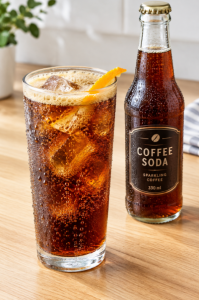
Sparkling coffee soda combines brewed coffee or espresso with carbonated water, sweetener, and optional flavorings. Unlike a traditional latte, it contains no milk in its basic form. Instead, carbonation adds a lively texture that highlights the coffee’s aroma and flavor.
The drink can be simple, using only chilled coffee and sparkling water, or more sophisticated, featuring carefully filtered espresso, concentrated syrup, bitters, and a tiny amount of salt solution.
The most important consideration is coffee strength. Carbonation and additional water can make coffee taste weaker, so begin with a concentrated brew and adjust the dilution to suit your preference.
Ingredients for Sparkling Coffee Soda
This recipe makes approximately one generous serving of coffee soda. It is inspired by a coffee-focused espresso soda, with practical adjustments for a home kitchen.
For the Coffee Soda
- 19 g ground coffee for a double espresso
- Approximately 40 g espresso yield
- 180 g cold, clean-tasting water, as a starting point for dilution
- 30 g rich simple syrup
- A few drops of chocolate bitters, adjusted to taste
- A few drops of 20% saline solution, adjusted carefully
- Chilled sparkling water, if using the mixing method
- Ice, optional
Important: The coffee, water, syrup, and flavoring quantities provide a starting point based on the original testing process. The final published video recipe does not specify every final measurement. Adjust the coffee concentration, sweetness, and sparkling water to your taste.
For the Rich Simple Syrup
- 100 g white sugar
- 50 g water
This is a 2:1 sugar-to-water syrup by weight. It provides concentrated sweetness without adding as much water as a standard 1:1 syrup.
For the Saline Solution
- 20 g salt
- 80 g water
Mix until the salt dissolves completely. Store in a clean, labeled dropper bottle in the refrigerator and use a small amount at a time. This solution is concentrated, so add only a few drops and taste as you go.
How to Make Sparkling Coffee Soda at Home
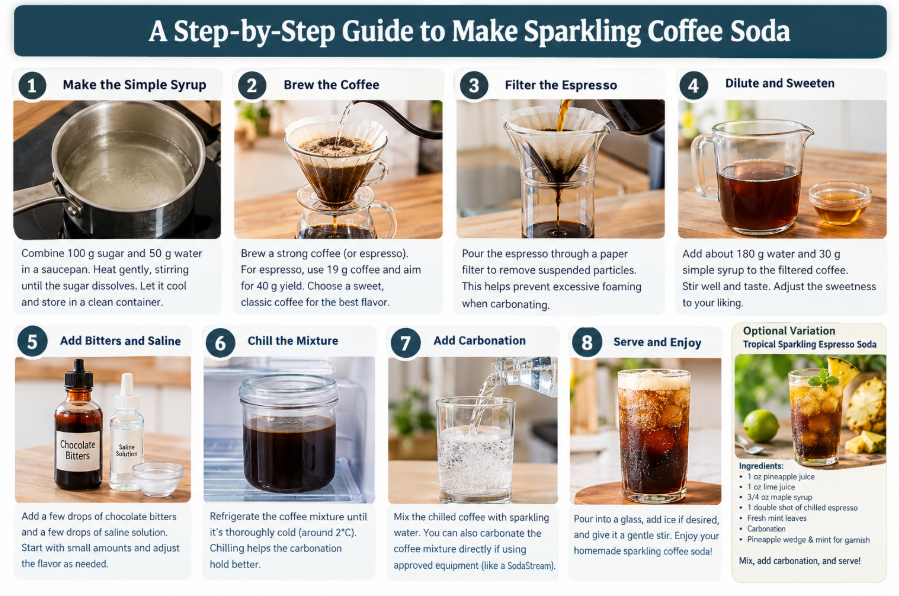
Step 1: Prepare the Simple Syrup
Combine the sugar and water in a small saucepan. Heat gently, stirring until the sugar has completely dissolved. There is no need for a prolonged boil.
Remove the pan from the heat and allow the syrup to cool. Transfer it to a clean container or squeeze bottle. Refrigerate until needed.
A rich syrup is useful in cold drinks because its concentrated sweetness makes it easier to control dilution. It also mixes readily into chilled coffee when added gradually.
Step 2: Brew a Sweet, Balanced Espresso
Choose a coffee with a sweet, classic flavor profile. A clean, washed coffee can be an excellent starting point because its sweetness and familiar coffee character work well in a soda.
For an espresso-based version, start with 19 g of ground coffee and aim for approximately 40 g of espresso. The exact yield will depend on your equipment, coffee, and extraction preferences.
Avoid assuming that the most unusual or intensely fruity coffee will automatically make the best soda. The goal is to create a balanced drink in which the coffee remains recognizable after adding sweetness and carbonation.
Step 3: Filter the Espresso
This is one of the most important steps when preparing coffee for direct carbonation.
Fresh espresso contains crema, fine coffee particles, and other suspended material. These particles can provide nucleation points where dissolved carbon dioxide escapes rapidly, producing excessive fizz and foam.
To reduce this problem, slowly pour the espresso through a paper coffee filter. A V60 filter is one option. Espresso can clog the paper because of its fine particles, so allow it to drain patiently rather than forcing it through.
The aim is a cleaner liquid with fewer suspended particles. You will lose the crema, but the resulting coffee can be easier to carbonate in equipment designed for that purpose.
Step 4: Dilute the Coffee
Espresso is much more concentrated than filter coffee. Diluting it helps produce a drink with a more approachable strength while preserving enough intensity to stand up to carbonation.
For a starting point, add approximately 180 g of water to the filtered espresso. Use good-tasting, clean water because its flavor will be noticeable in the finished soda.
If you own a refractometer, measuring total dissolved solids can help you calculate dilution more accurately. The original testing process aimed for a beverage strength around 1.5% before further flavor adjustments.
Without measuring equipment, taste the diluted coffee. It should be strong enough that its aroma and flavor remain noticeable when served cold.
Step 5: Sweeten the Coffee
Add approximately 30 g of the prepared rich simple syrup to the diluted espresso, then stir thoroughly.
Start with this amount rather than immediately making the drink as sweet as a conventional soft drink. Coffee has its own bitterness and acidity, and excessive sugar can hide the qualities that make the drink interesting.
For an easy sparkling cold brew soda recipe, you can substitute strong cold brew concentrate for the espresso. Dilute the concentrate according to its measured strength, then add syrup gradually. Cold brew varies considerably, so there is no single cold brew concentrate ratio for sparkling coffee that works for every batch.
Step 6: Add Chocolate Bitters and Saline
Add a few drops of chocolate bitters and taste the mixture before adding more. The purpose is not to turn the drink into a chocolate beverage. Instead, the bitters should provide a subtle bitterness, a rounded finish, and a hint of complexity.
Some bitters have a pronounced citrus character. That can be pleasant, but too much citrus may overpower the coffee. Choose a flavor profile that complements rather than competes with your beans.
Next, add a few drops of the prepared saline solution. Used sparingly, salt can soften the perception of bitterness and help the other flavors feel more integrated without making the drink taste salty.
Small adjustments matter here. Taste after each addition because bitters and saline are concentrated ingredients.
Step 7: Chill the Coffee Thoroughly
Chill the finished coffee mixture before carbonation. Cold liquid generally holds carbon dioxide more effectively than warm liquid, helping you achieve a more stable, lively fizz.
The original experiment targeted approximately 2°C. At home, refrigerate the mixture until thoroughly cold; avoid putting a sealed glass container in the freezer or allowing the liquid to freeze.
Keep the mixture covered and use clean equipment throughout preparation.
Step 8: Add the Carbonation
There are two practical ways to finish your drink.
Method A: Mix with sparkling water. Pour chilled sparkling water gently into a glass, then slowly add the chilled coffee mixture. Adjust the proportions until you find a balance between coffee intensity and fizz. This is the simplest approach for most home kitchens.
Method B: Carbonate the coffee mixture directly. Only use equipment specifically approved by its manufacturer for carbonating prepared coffee beverages. Follow its fill limits, pressure instructions, and cleaning guidance. Do not assume that a standard soda maker is suitable for coffee.
For the best texture, avoid vigorous stirring after carbonation. A gentle pour preserves more bubbles and helps prevent the drink from foaming over.
Step 9: Serve and Enjoy
Pour the finished soda into a clean glass. Add ice if desired, although serving the drink well chilled without ice helps prevent extra dilution.
Bring the glass to your nose before taking a sip. A good coffee soda should offer an inviting coffee aroma, a refreshing sparkle, balanced sweetness, and a clean finish.
Try a Tropical Sparkling Espresso Soda
If you want something more adventurous, the same principle works beautifully with fruit and herbs. A second variation from the supplied transcript combines pineapple, lime, maple syrup, chilled espresso, and mint.
Ingredients
- 1 oz pineapple juice
- 1 oz lime juice
- 3/4 oz maple syrup
- 1 double shot of chilled espresso
- A few fresh mint leaves
- Carbonation, using a suitable method
- A pineapple wedge and extra mint for garnish
Preparation
- Combine the pineapple juice, lime juice, and maple syrup in a suitable mixing container.
- Add the chilled espresso and mint leaves.
- Mix gently to combine the flavors.
- Add carbonation using an appropriate method, allowing room for foam.
- Serve with a pineapple wedge and a handful of mint.
The pineapple juice and espresso can create a substantial foam when carbonated. This is part of the drink’s appeal, but it also means you should leave plenty of headspace and pour carefully.
Tips for Better Sparkling Coffee Soda
How to Stop Coffee Soda from Foaming Over
Excessive foam usually results from a combination of dissolved carbon dioxide, coffee’s natural foaming properties, suspended particles, and the way the liquid is handled.
- Start cold: Chill the coffee mixture and sparkling water thoroughly.
- Filter espresso: Paper filtration removes many fine particles that can encourage rapid bubble formation.
- Pour slowly: Avoid dropping a large amount of carbonated liquid into coffee from a height.
- Leave headspace: Use a suitably large glass or approved carbonation vessel.
- Avoid shaking: Do not shake a carbonated drink or open a pressurized container abruptly.
- Follow equipment instructions: Never exceed fill lines or use a carbonation device for liquids it is not designed to handle.
Choose the Right Sweetener
The best simple syrup for sparkling cold brew recipe applications is often a rich 2:1 syrup when you want concentrated sweetness and minimal added water. A 1:1 syrup is also useful if you prefer a lighter sweetness or want to make a syrup that is easy to prepare.
For a sugar free vanilla sparkling iced coffee recipe, use a suitable sugar-free vanilla syrup in place of the simple syrup. Start with a small quantity because sugar-free products differ in sweetness and aftertaste. Keep the coffee chilled and add sparkling water just before serving.
Can You Make Coffee Soda with SodaStream?
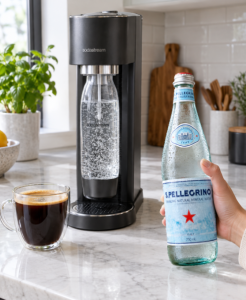
If you’re wondering how to make coffee soda with SodaStream, the most practical approach is to carbonate plain water according to the machine’s instructions, then combine it with chilled coffee and syrup in a glass.
Many standard home soda makers are designed for water only. Carbonating coffee directly may cause excessive foaming, messy pressure release, or equipment problems. Check your exact model’s instructions before attempting to carbonate anything other than water.
Experiment with Coffee Strength and Flavor
The finished drink is only as good as the coffee you start with. Sweet, clean coffee can produce a balanced soda, while excessive bitterness or stale flavors become particularly noticeable in a simple recipe.
Start with a moderate level of carbonation. Extremely fizzy drinks can feel harsh and may overwhelm coffee’s subtler flavors. The aim is a pleasant sparkle, not maximum pressure.
Expert Tips for Better Coffee Soda
Quick tips checklist
- Start with a sweet, clean, washed coffee.
- Filter as much as you can, even if it is slow.
- Use clean, good-tasting mineral water.
- Use bitters and saline sparingly.
- Label and date your bottles.
- Try a less citrusy, more classic chocolate bitters for a deeper cola profile, or add caramel color for the classic cola look.
Frequently Asked Questions
1. Can I use filter coffee instead of espresso?
Yes. Brew a stronger-than-usual pour-over and allow it to cool. The original testing process used approximately 75 g of coffee per liter of water to achieve a more concentrated filter brew. Sweeten and dilute to taste before serving with carbonation.
2. What is the best coffee for sparkling coffee soda?
Choose fresh coffee with a sweet, balanced, classic flavor profile. A clean washed coffee is a useful starting point. You can experiment with fruitier coffees later, but the best choice depends on the sweetness, acidity, and bitterness you enjoy.
3. Can I use cold brew concentrate?
Absolutely. Cold brew concentrate is a convenient alternative to espresso. Dilute it according to its measured strength, add sweetener, and combine it with chilled sparkling water. Adjust the ratios because concentrates vary between recipes and brands.
4. Why should espresso be filtered before carbonation?
Filtering removes many suspended particles and crema that can encourage carbon dioxide to escape rapidly. The result may carbonate more predictably and produce less uncontrolled foam.
5. How much carbonation should coffee soda have?
Begin with moderate carbonation. A gentle, refreshing fizz often complements coffee better than aggressive bubbles. Adjust the sparkling water proportion or the settings of compatible equipment to suit your preference.
6. Can I prepare coffee soda ahead of time?
You can prepare the coffee base and syrup in advance, refrigerate them in clean, covered containers, and add sparkling water when ready to serve. This approach preserves carbonation and makes it easier to control the final flavor.
Prepared coffee soda is best enjoyed fresh. The original creator notes that coffee flavor degrades over time and that the drink is not pasteurized. Keep the mixture refrigerated, avoid storing it for extended periods, and discard it if its appearance, smell, or taste changes unexpectedly.
7. Do I need espresso to make coffee soda?
No. A strong V60 pour-over brewed at 75 g per liter also works. Espresso gave a more intense result in testing.
8. Why does my coffee soda taste flat or foam excessively?
Suspended coffee particles and warm liquid are the usual causes. Paper-filter the coffee and chill it to about 2°C before carbonating.
9. Can I make it without a CO2 rig?
Yes. A SodaStream or a cream whipper with CO2 cartridges can both carbonate at home.
10. How long does coffee soda last?
It is best fresh. Drink it within a day or two, since the coffee flavor fades and turns stale.
11. Why add salt?
A few drops of saline soften bitterness and enhance sweetness without tasting salty.
12. What coffee is best?
A clean, sweet, washed coffee. Avoid funky naturals for your first batch.
Conclusion: Make Your Own Sparkling Coffee Soda
Making sparkling coffee soda is an opportunity to treat coffee as more than a hot drink or a traditional iced beverage. With concentrated coffee, rich simple syrup, carefully measured bitters, a tiny amount of saline, and controlled carbonation, you can create a refreshing drink with real coffee character.
Begin with the espresso version if you enjoy a classic coffee flavor. Try the tropical pineapple, lime, maple, and mint variation when you want something brighter and more adventurous. Keep your ingredients cold, filter the espresso when appropriate, and adjust sweetness and fizz gradually.
Key Takeaways
-
- Use fresh, flavorful coffee and start with a sufficiently concentrated brew.
- Prepare a rich simple syrup to add sweetness without excessive dilution.
- Filter espresso before direct carbonation to reduce suspended particles.
- Use chocolate bitters and saline sparingly to build a balanced finish.
- Chill the coffee thoroughly and avoid excessive carbonation or vigorous pouring.
- For standard SodaStream machines, carbonate water separately and mix it with coffee in the glass.
- Serve fresh and refrigerate the prepared coffee base promptly.
- Use a 2:1 simple syrup to limit dilution.
- Paper-filter your coffee to remove crema and fines.
- Target about 1.5% coffee strength and around 8% sugar.
- A few drops of chocolate bitters and saline transform the flavor.
- Chill to about 2°C and purge air before carbonating.
- Aim for around 3 g of CO2 per liter and drink it fresh.
Learning to make sparkling coffee soda comes down to respecting a few fundamentals: clean coffee, controlled sweetness, a touch of bitters and salt, cold temperature and moderate carbonation. Get these right and you will have a balanced, refreshing drink that feels like something from a specialty cafe. Try the base recipe first, then experiment with variations.
Try the recipe, experiment with your favorite beans, and discover how a little sparkle can transform your everyday coffee into something unexpected.
