
How to Clean a Coffee Grinder: Easy Deep-Clean Guide
A clean grinder is one of the easiest ways to improve consistency and keep coffee tasting fresh. Over time, coffee oils and retained grounds can accumulate inside the hopper, burrs, grind chamber, and discharge path. That buildup can eventually affect flavor and grinder performance.
This guide explains how to clean a coffee grinder using a practical approach based on grinder-cleaning pellets, while also covering manual cleaning methods, burr maintenance, compressed air, and grinder-specific techniques. The goal is not simply to make the grinder look clean, but to remove the coffee residue that can remain inside areas you cannot easily reach.
Why You Should Clean Your Coffee Grinder
Every time coffee beans pass through a grinder, tiny particles remain behind. Some settle around the burrs and grind chamber, while oils can adhere to internal surfaces. Darker and oily roasted beans can leave particularly noticeable residue.
Routine cleaning helps reduce this buildup and prevents old grounds from mixing with fresh coffee. It can also make grinder maintenance easier because less residue accumulates between deeper cleaning sessions.
How Often Should You Clean a Coffee Grinder?
There is no single schedule that works for every grinder. Cleaning frequency depends on how often you grind, the type of beans you use, and whether you are operating a home or commercial grinder.
- Light home use: A deeper cleaning every month or two may be sufficient.
- Daily home use: Inspect the grinder regularly and clean it when buildup becomes noticeable.
- Heavy or commercial use: More frequent cleaning may be necessary.
- Very oily beans: Consider cleaning more often because oils can accumulate quickly.
The important point is to base the schedule on usage rather than following an arbitrary calendar.
What You Need to Clean a Coffee Grinder
A basic cleaning can be surprisingly simple. You do not necessarily need a collection of specialized equipment, although a dedicated coffee grinder cleaning kit can make routine maintenance easier.
- Grinder-cleaning pellets or tablets
- A soft grinder brush
- A dry microfiber cloth
- A small vacuum or suitable cleaning blower
- Clean, dry coffee beans for purging
- Manufacturer-approved tools for removing burr components, when necessary
For regular maintenance, cleaning pellets are particularly convenient because they can travel through the burrs and grind path similarly to coffee beans.
How to Clean a Coffee Grinder With Cleaning Pellets
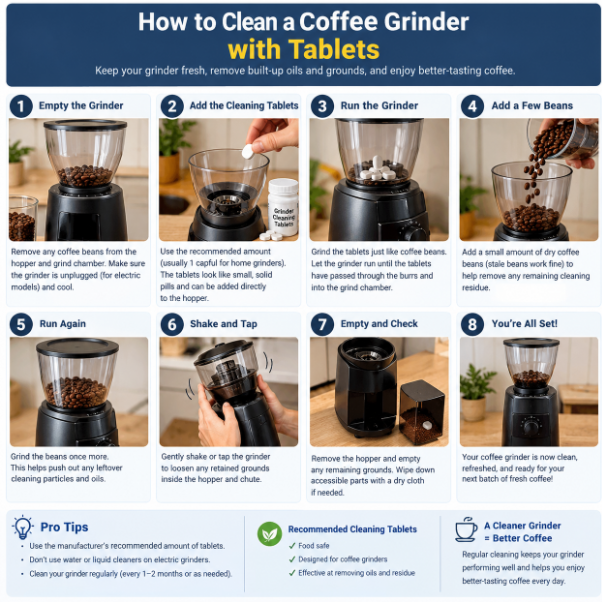
The pellet method is one of the simplest ways to remove accumulated coffee residue without completely disassembling the grinder. The process demonstrated in the source material uses grinder-cleaning pellets designed to absorb and carry away coffee oils and loose residue.
1. Prepare the Grinder
Before starting, empty the hopper and make sure there are no coffee beans waiting to enter the grinding chamber. Follow your grinder manufacturer’s safety instructions, particularly if you need to remove the hopper or access the burrs.
For a typical home grinder, you only need a relatively small quantity of cleaning pellets. Larger commercial-style grinders may require more. Always follow the dosage instructions supplied with the particular cleaning product rather than assuming that more pellets will produce better results.
2. Add the Cleaning Pellets
Cleaning pellets are designed to be fed through the grinder in much the same way as coffee beans. Add the recommended quantity to the hopper and run the grinder according to the manufacturer’s instructions.
The pellets pass through the grinding mechanism and help collect loose coffee particles and oily residue along the grind path. This makes them particularly useful for areas that are difficult to reach with a brush.
3. Purge the Grinder With Coffee Beans
After running the cleaning pellets, use a small amount of coffee beans to purge remaining cleaning material from the grinder. Stale but dry beans can be useful for this purpose, so you do not necessarily have to waste fresh specialty coffee.
Avoid using beans that have been exposed to moisture or show any signs of mold. The purpose of this step is simply to push remaining particles through the grinder.
4. Shake and Tap Out Retained Grounds
Once the purge is complete, gently shake or tap the grinder as appropriate for its design. This can help loosen retained grounds around the hopper and discharge area.
Run another small amount of beans through the grinder if necessary. Finally, empty the hopper and inspect the accessible areas for remaining grounds.
How Often Should You Clean Your Grinder?
The right schedule is somewhat subjective and depends on how much you grind. For a regular home grinder used to make a pot of coffee every morning, cleaning every month or two is a sensible routine. Some people stretch that interval depending on how they use the grinder. Heavier use, such as daily espresso or oily dark roasts, calls for more frequent cleaning.
What Is Urnex Grindz and Why Use It?
Urnex Grindz is a tablet-style grinder cleaner that you run through the grinder just as you would coffee beans. The tablets pull oils, grime, and residue out of the grind chamber and along the grind path, leaving the grinder noticeably refreshed. It works on both standard coffee grinders and espresso grinders.
Choosing the Right Container Size
The container shown in the video is the 430 g size, which is designed for commercial applications. If you use your home grinder often, this larger size may suit you. Occasional users may prefer the smaller container, which also includes instructions. The packaging has clear directions on the back, so the process is easy to follow.
Is It Safe for Your Grinder?
Many buyers look for food safe coffee grinder cleaning pellets so that nothing harmful ends up in their cup. Grindz is made for exactly this purpose, and since it is used inside a food-contact appliance, you should still follow the label directions and the grinder manufacturer’s guidance. For people who care about ingredients, it is also worth comparing any eco friendly coffee grinder cleaner you consider against the product’s stated materials.
Step-by-Step: How to Clean a Coffee Grinder with Grindz Tablets
What You Will Need
- Urnex Grindz tablets
- The measuring cap from the container
- A handful of old or expired coffee beans
- A soft brush and cloth (optional but helpful)
Step 1: Measure the Right Amount
For a typical home grinder, you only need about one capful of tablets. Larger machines need more. A commercial-style espresso grinder or bulk grinder at home calls for a couple of capfuls, and a full-size grinder with multiple hoppers may need up to three capfuls.
Step 2: Add the Tablets and Grind
Pour the tablets straight into the hopper just as if they were beans. Then run the grinder until they have all passed through. Adjust the grind setting as the product directions suggest for your machine type.
Tip for Burr Grinder Owners
This method is a convenient way to service burrs without disassembling anything. It makes Grindz a popular choice among people searching for the best coffee grinder cleaning pellets for burr grinders, and it is equally useful as espresso grinder cleaning pellets for machines that see daily shots.
Step 3: Purge Residue with Old Beans
Next, clear out any leftover residue from the tablets by running some beans through. The video uses expired beans, though you do not need quite that many. Saving leftover or stale beans for this purpose is smart. Stale beans simply lose flavor over time, so they work fine for purging as long as they have not been stored in damp conditions where mold could grow.
Step 4: Shake, Tap, and Run Once More
Give the grinder a gentle shake and tap to knock loose any retained grounds. Then run it one more time to push everything out.
Step 5: Empty the Hopper and Finish
Empty out the hopper and discard any beans you used for purging. That is really all it takes, and your grinder is ready to use again.
Extra Cleaning Steps Between Tablet Runs
Tablets handle the internal grind path, but you can also take a few quick manual steps. Wipe down the hopper, clean any removable parts, and take the burrs out for a closer clean if your grinder allows it.
How to Deep Clean Electric Coffee Grinder
If you want to know how to deep clean electric coffee grinder components, start with the manufacturer’s instructions. Unplug the grinder before removing any removable components or accessing the burr area.
Remove the hopper and brush away loose grounds. If the burr assembly is designed to be removed by the user, take it out according to the manufacturer’s instructions. Use a soft brush to remove accumulated grounds rather than applying excessive force.
Wipe accessible surfaces with a dry or appropriately dampened cloth, making sure components are completely dry before reassembly. Do not allow water to enter the motor or electrical components.
Can You Clean a Coffee Grinder With Compressed Air?
You can clean a coffee grinder with compressed air in some situations, but it should be used carefully. A strong blast of air can push coffee particles deeper into the grinder or spread them into areas that are difficult to clean.
For that reason, a soft brush or suitable vacuum is often easier to control. If compressed air is permitted by your grinder manufacturer, use it cautiously and keep moisture away from the grinder.
How to Clean a Manual Coffee Grinder
If you’re learning how to clean a manual coffee grinder, the process is generally straightforward because there is no motor or electrical system to protect.
- Empty the grinder completely.
- Remove the handle and hopper where the design permits.
- Follow the manufacturer’s instructions to access the burrs.
- Brush loose coffee particles from the burrs and chamber.
- Clean the catch cup and exterior.
- Make sure all components are completely dry.
- Reassemble the grinder and check that the adjustment mechanism works correctly.
Avoid immersing precision burr assemblies in water unless the manufacturer specifically says they are washable.
How to Clean a Blade Coffee Grinder Without Rice
If you’re wondering how to clean a blade coffee grinder without rice, you can use a soft brush, dry microfiber cloth, and a small vacuum to remove loose grounds. Cleaning pellets specifically designed for compatible grinders may also be an option.
Remove the grinder from power before cleaning. Brush coffee particles from around the blade and grinding chamber, then wipe the accessible interior carefully. Because blade grinders have different designs, avoid putting liquids inside the motor housing.
Rice is sometimes suggested as a household cleaning method, but using a purpose-designed grinder cleaner is preferable when the manufacturer recommends one.
How to Clean a Conical Burr Grinder
The best way to clean a conical burr grinder is to combine routine brushing with periodic deeper cleaning. Start by removing the hopper and clearing out remaining beans.
Next, follow the manufacturer’s instructions for accessing the upper burr. Brush away loose particles and use appropriate grinder-cleaning pellets when recommended. Finish by purging the grind path with a small amount of coffee.
Do not change the burr alignment or grind calibration unnecessarily. If the burr carrier has a marked position or calibration system, take note of its original setting before removal.
How to Clean a Flat Burr Grinder
If you’re learning how to clean a flat burr grinder, the same basic principles apply, but pay particular attention to the space surrounding the flat burrs and the discharge chute.
Remove accessible components according to the grinder’s instructions, brush away loose grounds, and use cleaning pellets where compatible. Flat burr grinders can retain fine particles around the burr chamber, so a careful brush and vacuum combination can be particularly useful.
Cleaning Baratza Encore Grinders
For anyone searching for how to clean Baratza Encore coffee grinder components, start with the official cleaning and maintenance instructions for your specific Encore model. Remove the hopper and accessible burr components as directed, then brush away loose grounds and residue.
Some owners also search specifically for Baratza Encore cleaning tablets. Before using any cleaning product, confirm that it is compatible with your particular grinder and follow the product manufacturer’s dosage instructions.
After cleaning, reassemble the grinder carefully and verify that the burr components and grind adjustment mechanism are correctly seated.
Choosing Coffee Grinder Cleaning Pellets
There are several types of grinder-cleaning products available, including pellets, tablets, and complete cleaning kits. The best option depends on your grinder and how frequently you maintain it.
Espresso Grinder Cleaning Pellets
Espresso grinder cleaning pellets are designed to pass through the grinding mechanism and help remove coffee residue. They can be particularly convenient for espresso grinders because oils and fine grounds may accumulate quickly with frequent use.
Best Cleaner for Espresso Grinder Burrs
The best cleaner for espresso grinder burrs is ultimately one that is explicitly compatible with your grinder and used according to its manufacturer’s instructions. Purpose-made grinder pellets can be useful for routine internal cleaning, while a brush is better for manually removing visible buildup.
Food Safe Coffee Grinder Cleaning Pellets
When choosing food safe coffee grinder cleaning pellets, check the manufacturer’s product information and intended use. A cleaner designed specifically for coffee grinders should clearly explain how it should be used and whether it is suitable for your grinder type.
Best Coffee Grinder Cleaning Pellets for Burr Grinders
When evaluating the best coffee grinder cleaning pellets for burr grinders, consider compatibility, recommended dosage, residue removal, package size, and the grinder manufacturer’s guidance rather than choosing solely by price.
Eco-Friendly Coffee Grinder Cleaning Options
An eco friendly coffee grinder cleaner may appeal to users who want to reduce unnecessary waste. However, “eco-friendly” should not be treated as a substitute for compatibility and proper cleaning performance.
Look for clear information about ingredients, packaging, disposal, and intended use. Most importantly, choose a product specifically formulated for coffee-grinder maintenance rather than improvising with household chemicals.
Common Coffee Grinder Cleaning Mistakes
Using Too Much Water
Moisture is one of the biggest concerns when cleaning an electric grinder. Keep water away from electrical components and make sure removable parts are completely dry before reassembly.
Ignoring the Discharge Path
Cleaning only the hopper does not remove grounds trapped farther inside the grinder. Cleaning pellets, brushes, and controlled purging can help address the internal grind path.
Overusing Cleaning Products
More cleaning pellets do not necessarily mean better cleaning. Follow the dosage provided by the product manufacturer.
Failing to Purge After Cleaning
Always follow the cleaner’s instructions regarding post-cleaning purging. Running a small amount of suitable coffee through the grinder can help remove remaining particles before you return to your normal beans.
Frequently Asked Questions
How often should I clean my coffee grinder?
Cleaning frequency depends on usage, bean type, and grinder design. A lightly used home grinder may need deep cleaning every month or two, while heavily used or oily-bean grinders may require more frequent attention.
Are coffee grinder cleaning pellets worth using?
They can be a convenient way to clean internal areas that are difficult to reach manually. They work best as part of a broader maintenance routine that includes brushing and cleaning removable components.
Can I use rice to clean a coffee grinder?
Rice is a commonly suggested DIY method, but purpose-designed grinder cleaners are generally a more appropriate choice when they are compatible with your grinder and recommended by the manufacturer.
Can I wash coffee grinder burrs?
Only wash burr components if the manufacturer specifically permits it. Many burrs and grinder components should instead be cleaned with a dry brush or other approved method.
What is the best way to clean a coffee grinder?
A practical approach is to empty the grinder, clean accessible components with a suitable brush, use compatible cleaning pellets periodically, and purge the grind path before returning to normal coffee.
How do I clean a coffee grinder quickly?
Run a capful of Grindz tablets through the grinder, purge with a handful of old beans, give it a shake and tap, then run it one more time.
Can I use Grindz in an espresso grinder?
Yes. It can be used to clean coffee grinders and espresso grinders alike.
How many tablets do I need?
About one capful for a standard home grinder. Use two for larger commercial-style or bulk grinders, and up to three for full-size grinders with multiple hoppers.
Do I have to use old beans afterward?
Running beans through clears residue left by the tablets. Stale beans are fine for this as long as they have not been exposed to moisture or mold.
How often should I clean my grinder?
Every month or two works for typical daily home use. Clean more often if you grind heavily or use oily beans.
Key Points
- Regular cleaning helps reduce retained coffee grounds and oily residue.
- Cleaning pellets can reach parts of the grind path that are difficult to brush manually.
- Always follow the grinder and cleaner manufacturer’s instructions.
- Use dry cleaning methods around electrical components.
- Brush and inspect burrs periodically rather than relying exclusively on pellets.
- Use a small amount of dry coffee afterward to purge remaining cleaner when instructed.
- Choose cleaning products based on grinder compatibility, intended use, and clear manufacturer guidance.
Conclusion
Learning how to clean a coffee grinder does not have to involve a complicated teardown every time. For routine maintenance, a combination of a soft brush, careful inspection, and compatible grinder-cleaning pellets can remove much of the coffee residue that accumulates during everyday use.
The key is consistency.
Clean the hopper and accessible areas regularly, perform a deeper internal cleaning when necessary, and pay particular attention to the burrs and grind path. Whether you own a blade grinder, manual grinder, conical burr grinder, flat burr grinder, or espresso grinder, following the manufacturer’s maintenance instructions will help you clean it safely and keep your coffee equipment performing reliably.
