
Step-by-step Expert Troubleshooting Tips to Fix Espresso Machine Problems Fast
When your espresso machine stops pumping water, produces weak coffee, or refuses to heat up, your morning routine can quickly become frustrating. Fortunately, most coffee machines issues are simple, and a logical, step-by-step approach is the fastest way to fix espresso machine problems without wasting money on parts you don’t need.
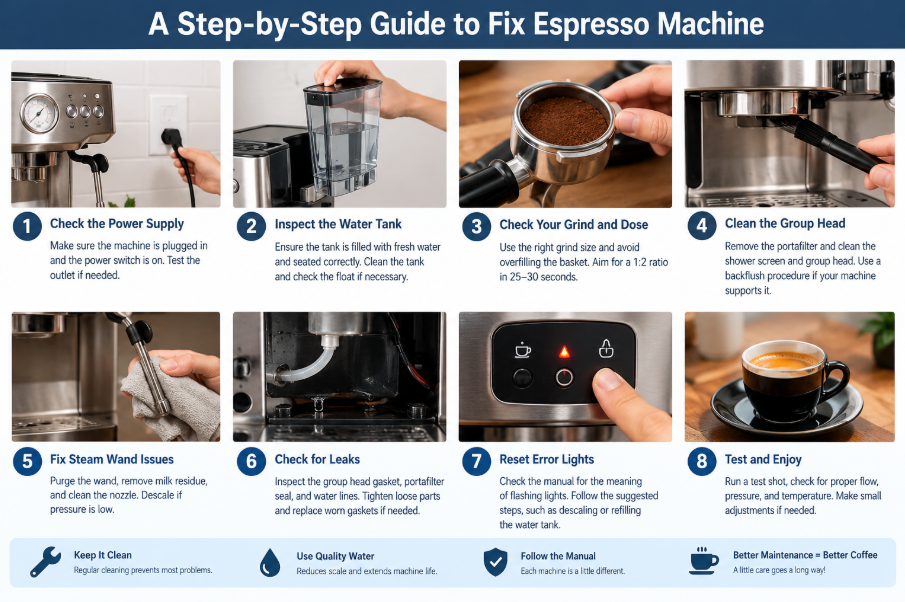
Learning how to fix espresso machine problems starts with a systematic approach. Check the power supply, inspect the water tank, look for blockages, and clean the machine before assuming an internal component has failed. Other problems, such as soggy espresso pucks, usually involve coffee preparation rather than a broken machine.
This guide explains practical troubleshooting methods for popular machines, including Breville, DeLonghi, and Gaggia models.
You will learn how to identify common symptoms, restore water flow, improve extraction, and recognize when professional repair is the safer option.
Also, you can troubleshoot coffee maker faults fast and fix espresso machine steam wands, pumps, clogged group heads, low pressure to water flow, heating failures, leaks and soggy pucks without calling technician
1. Start With Basic Espresso Machine Troubleshooting
Before disassembling anything, work through a few simple checks. These steps can resolve problems that appear much more serious than they actually are.
Check the Power Supply
- Confirm the machine is plugged in and the outlet works. Test it with a grinder or phone charger.
- Make sure the power switch is fully on. Some models hide a second switch on the back or underneath the housing.
- Test the outlet with another suitable device if necessary
- If the machine remains unresponsive, inspect the power cord for visible damage. And, check whether a breaker has tripped.
- Do not use a machine with a damaged cable or attempt electrical repairs unless you have the appropriate training.
Inspect the Water Tank & Float
Most machines use a float or sensor that blocks operation if the tank is not full or not seated correctly. A tank that sits a few millimeters too high can stop the machine from working.
If the float is stuck, or its magnet has fallen out, the machine may think the tank is empty even when it is full. Seat the tank firmly, clean it, and give the float a gentle wiggle.
Make sure the reservoir contains enough water and sits correctly in its housing. A poorly seated tank may prevent water from entering the system. Some machines also use a float or sensor to detect the water level.
If the reservoir is full but the machine behaves as though it is empty, check the float for visible obstructions and clean the tank according to the manufacturer’s instructions.
Reset the Machine
Modern espresso machines are basically small computers. If the machine has frozen controls or unexpected blinking lights, switch it off and unplug it for approximately 30 seconds.
Reconnect the power and follow the manufacturer’s startup procedure. This may clear a temporary electronic fault that cause blinking lights or frozen displays, although it will not repair a damaged pump or heating element.
Sometimes the whole repair takes half a minute.
2. How to Fix an Espresso Machine Not Pumping Water
When troubleshooting how to fix espresso machine not pumping water, first determine whether the pump is running. A humming pump with no water flow suggests an airlock, an empty or incorrectly seated reservoir, or a blockage. Clicking sounds without normal pump operation may indicate an electrical or mechanical fault.
When the pump runs but nothing comes out, air is usually trapped in the water circuit. Air gets in with a brand-new machine, after long storage, or after the tank runs dry.
This applies to the DeLonghi Dedica, the Breville Barista Express, the Gaggia Classic Pro and many others.
So, here is how to fix espresso machine not pumping water problems step by step.
a. Prime an Airlocked Water Circuit
Air can enter the water circuit when a machine is new, has been stored for a long time, or has run with insufficient water. In these situations, the pump may struggle to draw water into the system.
- Fill the reservoir or the tank with fresh water and seat it securely by pushing it down until it stops.
- Place a suitable container beneath the steam wand.
- Use the hot water or steam lever, which bypasses the brew group. The brew group normally needs enough pressure to open a small spring valve, while the steam wand gives air a clear path out.
- Run the pump and switch between the brew group and the steam wand until steady water flows
- Run hot water for 10 to 15 seconds to purge any remaining air.
- If the model permits it, briefly operate the pump through the appropriate hot-water function to help purge trapped air.
- Stop if the pump runs dry, overheats, or fails to establish flow after the recommended priming procedure.
Some coffee machines allow water to bypass the brew group through the steam wand, providing a less restrictive route for priming. The exact procedure varies by model, so consult the manual before operating unfamiliar controls.
b. Check for Blockages
Coffee oils, fine grounds, milk residue, and mineral deposits can restrict water flow. Clean the removable basket, inspect the group head, and clear accessible openings according to the manufacturer’s instructions.
If your machine supports backflushing, use an approved espresso machine cleaner and follow the recommended procedure. Do not force water through a blocked component or disassemble pressurized parts unnecessarily.
If a Breville espresso machine is not pumping water, these checks are a sensible starting point. If the reservoir is correctly installed and the water circuit is clear but the pump still fails, the pump, valves, sensors, or internal wiring may need professional diagnosis.
Breville Espresso Machine Not Pumping Water
If your breville espresso machine not pumping water issue persists after priming, check the tank seating and clean the inlet filter at the bottom of the tank. Then check for blockages in the group head and steam wand. If the pump hums but never moves water, it may be failing and need a technician.
DeLonghi Dedica Safety Valve
The Dedica is known for an overpressure valve that wears out over time. You will still get some water, but you may also see bubbles in the tank. That is a different fault from simple air in the line.
3. How to Fix an Espresso Machine Not Heating Up
If you need to fix espresso machine not heating up, begin by checking the power supply and allowing the machine the full warm-up period specified in its manual. A machine that powers on but produces cold water may have a heating-system problem rather than a brewing problem.
a. Understand the Heating System
Most espresso machines use a boiler or thermoblock to heat water. A heating element generates the heat, while a thermostat, temperature sensor, or PID controller helps regulate the temperature.
Heating problems may result from mineral buildup, a failed heating element, a faulty thermostat, a thermal fuse, damaged wiring, or a malfunctioning control board. These components generally require electrical testing to identify the actual fault.
b. Descale the Machine Safely
Mineral deposits can accumulate inside the boiler or thermoblock, reducing heat transfer and affecting brewing performance. Run the manufacturer’s recommended descaling cycle and flush the system thoroughly with clean water afterward.
Avoid using vinegar unless the manufacturer explicitly approves it. Some machines and internal materials may not tolerate vinegar well, and the wrong cleaning method can create additional problems.
If the machine still fails to heat after basic checks and appropriate descaling, arrange a professional inspection. Internal heating components can carry dangerous electrical voltages even when the machine appears switched off.
4. How to Fix Low Pressure and Group Head Problems
Low pressure can produce weak espresso, slow extraction, or little coffee from the spouts. However, low flow does not always mean the pump is defective. Grind size, coffee dose, blocked passages, and mineral buildup can all restrict brewing performance.
a. Fix Low Pressure in an Espresso Machine Steam Wand
If the steam wand produces weak steam or inconsistent flow, allow the machine to reach its proper operating temperature first. Then inspect the wand for dried milk residue and blocked nozzle openings.
- Wipe the wand immediately after steaming milk.
- Purge it according to the manufacturer’s instructions.
- Remove and clean the nozzle only if the manual permits it.
- Descale the machine when mineral buildup is suspected.
If the wand remains weak after cleaning and proper warm-up, a steam valve, heating component, or internal pressure issue may require professional attention.
b. Espresso Machine Clogged Group Head Fix
For an espresso machine clogged group head fix, remove the portafilter and inspect the shower screen for visible coffee residue. Clean the screen and basket as directed by the manufacturer, and use an approved backflushing procedure if supported.
Do not use sharp objects that could damage the screen or internal passages. If water continues to distribute unevenly or fails to flow after cleaning, the blockage may be deeper in the system.
c. Fix Espresso Machine No Pressure
When you need to fix espresso machine no pressure symptoms, start by checking water supply, pump operation, grind size, and blockages. If the pump runs but no water emerges, prime the system when appropriate. If water flows normally without a coffee-filled portafilter but stops during extraction, the coffee bed may be too restrictive or a component may be blocked.
Pressure gauges and indicators vary between machines, so interpret readings using the manufacturer’s guidance rather than relying on one universal pressure value.
5. How to Fix Soggy Espresso Pucks
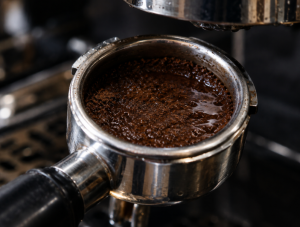
A soggy espresso puck is not automatically a sign of a broken machine or a bad shot. Some espresso machines use a three-way valve to release excess brewing water after extraction, helping produce a drier puck. Other machines do not vent this water, making a wet puck normal.
A small amount of moisture on the coffee bed is generally nothing to worry about. A standing puddle that remains on top or can be poured from the portafilter may indicate excessive restriction during extraction.
A little water on top of the puck right after brewing is normal. A standing puddle that does not soak in, or that you can pour out of the portafilter, means something needs adjusting. Machines with a two-way valve cannot vent excess water, so a soupy puck is expected on those models
a. Adjust Your Grind Size
Grinding too finely can restrict water flow and leave excess water in the basket. Try making the grind slightly coarser, then pull another shot and evaluate the result.
As a starting point for a conventional espresso, aim for approximately a 1:2 brew ratio in 25–30 seconds. For example, 18 grams of ground coffee may produce around 36 grams of espresso. Adjust these figures to suit your beans, machine, and taste.
b. Check Your Coffee Dose
Overfilling the basket can leave insufficient space for water to move through the coffee bed. You may also notice coffee sticking to the shower screen after extraction.
Check the basket’s recommended capacity and weigh your dose. Do not assume every double basket accepts the same amount of coffee.
c. Keep Tamping Consistent
Uneven or inconsistent puck preparation can contribute to extraction problems. Tamp level and consistently rather than trying to apply excessive force. Once the grounds are evenly compressed, additional force is generally less useful than correcting the grind or dose.
d. Consider Your Basket Type
Pressurized baskets are designed to help build brewing pressure when using less precisely ground coffee. They can behave differently from traditional, non-pressurized baskets, particularly when paired with freshly ground beans.
If you use a pressurized basket, check the dose and preparation before changing equipment. A non-pressurized basket and a suitable grinder can offer more control, but they also require more careful dialing in.
Ultimately, how to fix soggy espresso pucks comes down to understanding your machine and improving preparation. If the espresso tastes good and extracts consistently, a little water on the puck is not a reason to discard the drink.
The Quarter Trick for Dosing
Prep your puck as usual and place a quarter on top of the tamped bed. Lock in the portafilter, then remove it. A properly dosed puck shows the quarter barely indented. If the quarter is buried you have overdosed, and if there is no mark you have underdosed.
Don’t Skip the Taste Test
Even a soggy puck can produce a drinkable shot. If the shot ran on spec and tastes good, don’t worry about it. Always take a sip, because you cannot learn to fix what you have never tasted.
6. How to Diagnose Espresso Machine Leaks
Leaks should be investigated promptly because water can damage electrical components and surrounding surfaces. Turn off and unplug the machine if it is safe to do so, allow it to cool, and inspect only accessible external areas.
a. Fix a Breville Espresso Machine Group Head Leak
A group head leak may result from a worn group head gasket, a dirty sealing surface, or a portafilter that is not locking into place correctly. Clean accessible surfaces and check that the basket and portafilter are correctly fitted.
If water continues escaping around the portafilter during brewing, the gasket may need replacement. Use a compatible part and follow the service instructions for your model, or have a technician perform the repair.
b. DeLonghi Espresso Machine Portafilter Leaking Fix
For a DeLonghi espresso machine portafilter leaking fix, inspect the rim of the basket, the portafilter fit, and the group head seal. Excessive coffee in the basket can also prevent proper locking and sealing.
Reduce the dose if necessary, clean away coffee residue, and check whether the portafilter locks securely. Persistent leaks may indicate a worn gasket or damaged component.
c. Espresso Machine Leaking From Bottom Repair
Water appearing beneath the machine can come from an overflowing drip tray, a poorly seated reservoir, a damaged tank, or an internal hose or fitting. Empty the tray, reseat the reservoir, and inspect visible external surfaces for cracks.
If water continues leaking from underneath the housing, stop using the machine and seek professional assistance. An espresso machine leaking from bottom repair may involve internal plumbing, seals, or valves that should not be accessed without suitable training.
7. Flashing Lights, Grinder Problems, and Repair Costs
a. Espresso Machine Error Light Flashing Repair
A flashing light often means low water, an unseated tank, a descale reminder or a blockage.
Reset the machine by unplugging it for 30 seconds, then refill and reseat the tank.
Check your manual for the meaning of each light pattern. If the light returns, a sensor, pump or board fault may be the cause
An espresso machine error light flashing repair starts with identifying the exact light pattern. Depending on the model, flashing lights may indicate heating, descaling, an empty reservoir, a blocked system, or another operating condition.
Once again, try to check the manual for the specific indicator, verify the water supply, and complete any required maintenance. A power reset may clear a temporary software issue, but repeated warnings or error codes require further diagnosis.
Listen to Your Machine
- Pump running, no water: Likely an air lock or blockage.
- Clicking, no pump noise: Possible electrical or pump failure.
- Hissing or unusual noises: Often a pressure or steam issue.
b. Espresso Machine Grinder Clogged Repair Tool
If your espresso machine includes a built-in grinder, accumulated coffee oils and grounds may restrict bean feeding or grinding. Turn the machine off and follow the manufacturer’s cleaning instructions before removing accessible grinder components.
A suitable grinder brush, cleaning tool, or manufacturer-approved grinder cleaner can help remove residue. Never insert fingers or tools into a powered grinder. Persistent jams, unusual noises, or damaged burrs may require a technician.
c. Gaggia Classic Pro Boiler Leak Fix Cost
The Gaggia Classic Pro boiler leak fix cost depends on the actual source of the leak, replacement parts, labor rates, and whether additional damage has occurred. A gasket replacement may be less expensive than repairing a damaged boiler or replacing multiple internal components.
Because repair prices vary by location and machine condition, obtain a diagnosis and itemized quote before authorizing major work. Compare the repair cost with the price of replacing the machine, especially if it is older or has several faults.
8. When Should You Call an Espresso Machine Technician?
Basic cleaning, reservoir checks, descaling, and model-approved resets are reasonable first steps for many home users. Internal repairs are different. Espresso machines combine electricity, hot water, steam, and pressurized components, creating risks when handled incorrectly.
Contact a qualified technician if:
- The machine repeatedly trips a breaker or shows signs of electrical damage.
- The heating element, thermostat, wiring, or control board may have failed.
- The pump makes unusual noises or cannot restore water flow after approved troubleshooting.
- Water leaks from inside the housing.
- Pressure remains abnormal after cleaning and checking the coffee preparation.
- Error lights persist despite following the manufacturer’s instructions.
Do not open the machine while it is connected to power, and never attempt repairs on a hot or pressurized system.
Again, you can call a professional if power, water, blockages, reset and descaling have all been checked and the problem remains. Also call one for electrical faults, internal leaks, abnormal noises or any case where you are unsure. Safety comes first
Frequently Asked Questions
Why is my espresso machine not pumping water?
Common causes include an empty or incorrectly seated reservoir, trapped air, a blocked water circuit, or a faulty pump. Check the tank, follow the approved priming procedure, and clean accessible components before seeking repair.
Air is probably trapped in the pump circuit. Seat the tank fully, then purge the air through the steam wand or hot water function
Can I use vinegar to descale my espresso machine?
Only if the manufacturer specifically permits it. Otherwise use the manufacturer’s recommended descaler and flush thoroughly afterward.
An approved descaling solution is generally the safer choice because machine materials and internal components differ.
Why is my espresso puck wet after brewing?
A wet puck may be normal, particularly on machines without a three-way valve. Excessive standing water can indicate an overly fine grind, an excessive dose, or other restrictions in the coffee bed.
Usually the grind is too fine, the basket is overdosed, the tamp is too hard, or a pressurized basket is magnifying those issues. Some water on top is normal
Why does my espresso machine turn on but produce cold coffee?
It may not have completed its warm-up cycle, or mineral buildup may be affecting heat transfer. A failed heating element, thermostat, temperature sensor, or control board is also possible.
Is it worth repairing an espresso machine?
That depends on the machine’s age, condition, replacement-part availability, and repair estimate. A minor cleaning or gasket replacement may be worthwhile, while extensive boiler or electronic repairs may justify comparing replacement options.
How often should I descale?
It depends on your water hardness and usage. Hard water needs it more often. Regular descaling protects heating performance and improves taste.
Is it worth repairing an old machine?
Often yes, especially for gaskets, seals and valves. Compare the repair quote with the cost of a similar replacement before deciding.
Conclusion: Get Your Espresso Machine Working Again
You can often fix espresso machine faults yourself by working through the same checklist technicians use, one step at a time. Most problems come from a handful of causes: puck prep, trapped air, scale, clogs and worn seals. A methodical approach saves time and money
Learning how to fix espresso machine problems does not require immediately replacing parts or dismantling the machine. Start with the basics: check the power, seat the water reservoir, identify blockages, follow the correct priming procedure, and descale when needed.
For soggy espresso pucks, focus on grind size, dose, tamping consistency, and basket type before assuming something is broken. For heating failures, persistent leaks, abnormal pressure, or electrical problems, prioritize safety and professional diagnosis.
Key takeaways:
-
- Check power and water supply before attempting complicated troubleshooting.
- Prime an airlocked water circuit only according to the manufacturer’s procedure.
- Clean the group head, basket, and steam wand regularly.
- Use approved descaling products and maintain consistent espresso preparation.
- Do not ignore internal leaks, electrical faults, or persistent heating failures.
- Fix soggy pucks with grind, dose and tamp adjustments.
- Prime the pump through the steam wand when no water flows.
- Descale regularly with the recommended solution.
- Replace worn gaskets to stop group head and portafilter leaks.
- Never open the machine unless you are trained.
With regular maintenance and a methodical troubleshooting routine, you can resolve many common espresso machine problems, avoid unnecessary repair expenses, and get back to making better coffee at home.
